Skilled Worker Residence Permit in Norway: Who Qualifies and How to Apply
Whether you are an engineer, healthcare professional, IT specialist, teacher, chef, or another qualified worker, understanding the application process can help you avoid delays and improve your chances of approval. This guide explains who qualifies, how to apply, what documents you need, and what to expect after arriving in Norway.
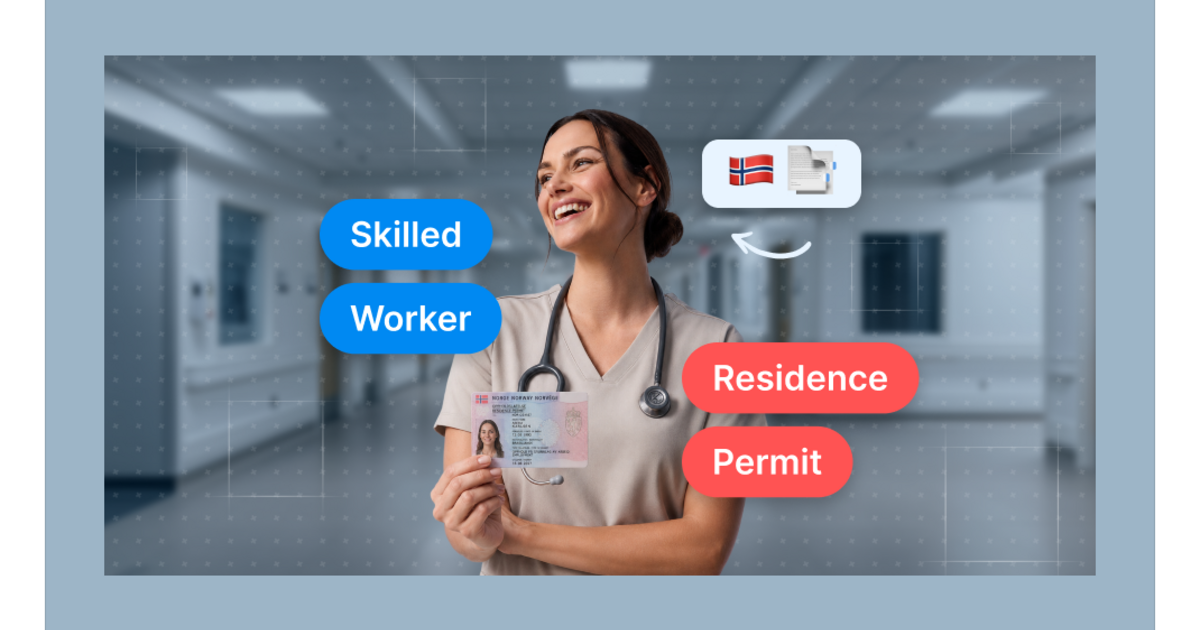
If you have received a job offer from a Norwegian employer or possess in-demand qualifications, applying for a skilled worker residence permit in Norway may be your pathway to living and working in the country.
Before starting your application, it is always recommended to review the latest immigration rules on the Norwegian Directorate of Immigration (UDI) website.
What Is a Skilled Worker Residence Permit in Norway?
A skilled worker residence permit allows qualified foreign nationals from countries outside the EU and EEA to live and work legally in Norway. The permit is designed for people who have relevant education, vocational qualifications, or professional experience that matches a specific job offered by a Norwegian employer.
Unlike short-term work permits, this residence permit allows you to establish yourself in Norway while building a long-term career. It can also become an important step toward permanent residence and eventually Norwegian citizenship if you continue to meet the legal requirements.
Who Qualifies for a Skilled Worker Residence Permit in Norway?
To qualify for a skilled worker residence permit in Norway, you must satisfy several conditions established by Norwegian immigration authorities.
First, you need a concrete job offer from an employer in Norway. The position should normally be full-time, and the salary must meet the minimum requirements established for your profession.
Second, your education or professional qualifications must be relevant to the position you have been offered. This usually includes a university degree, a vocational education, or documented specialist experience that is considered equivalent.
Finally, your employer must demonstrate that the employment complies with Norwegian laws regarding wages and working conditions.
Meeting these requirements does not automatically guarantee approval, but it significantly improves your chances of obtaining a residence permit.
Which Professions Are Most Commonly Approved?
Norway regularly experiences demand for qualified professionals across several industries.
Healthcare remains one of the strongest sectors, with nurses, doctors, physiotherapists, and other medical professionals frequently recruited from abroad.
The technology sector also continues to grow, creating opportunities for software developers, cybersecurity specialists, data engineers, and IT consultants.
Engineering professionals working in construction, energy, renewable technology, and manufacturing are consistently sought after. Skilled trades such as electricians, plumbers, mechanics, and welders may also qualify when they possess recognized vocational qualifications.
Education, hospitality, transportation, and the seafood industry also employ many international professionals.
Documents You Need
Preparing complete documentation is one of the most important parts of the application.
Most applicants will need a valid passport, an employment contract, proof of education or vocational qualifications, documentation of professional experience when relevant, and completed application forms.
Depending on your profession, additional documentation or professional authorization may also be required.
Because document requirements can change, always verify the latest checklist directly with UDI before submitting your application.
How to Apply
The application process usually begins online through the UDI application portal.
After completing your application, you will normally schedule an appointment to submit your documents and verify your identity at a Norwegian embassy, consulate, or visa application center if you are applying from outside Norway.
Once your application has been submitted, immigration authorities review your qualifications, employment contract, salary conditions, and supporting documents before making a decision.
Many applicants receive updates through their online application account during the processing period.
Detailed instructions and online applications are available on the official UDI website
Processing Times
Processing times vary depending on your nationality, the complexity of your application, and the overall workload of immigration authorities.
Some applications are processed within a few weeks, while others may require several months.
Submitting accurate documentation from the beginning can reduce unnecessary delays.
It is advisable not to make irreversible travel or relocation arrangements until your residence permit has been approved.
Do You Need to Speak Norwegian?
Many international companies use English as their working language, particularly within technology, engineering, research, and multinational organizations.
However, learning Norwegian can significantly improve your employment opportunities, salary potential, and career development.
Employers often prefer candidates who can communicate with colleagues, customers, and public authorities in Norwegian.
Language skills also make everyday life much easier, whether you are visiting a doctor, communicating with your child's school, or participating in your local community.
If you are planning to build a long-term future in Norway, learning the language should be one of your highest priorities.
Can Your Family Join You?
In many situations, your spouse, registered partner, cohabiting partner, or children may be eligible to apply for family immigration.
Each family member must satisfy the relevant immigration requirements, and your income may need to meet certain thresholds.
If your family plans to relocate together, it is worth understanding the application process before moving.
Can a Skilled Worker Residence Permit Lead to Permanent Residence?
Yes.
One of the greatest advantages of obtaining a skilled worker residence permit in Norway is that it can become the foundation for permanent residence.
After meeting the required period of legal residence and fulfilling language and integration requirements, many skilled workers become eligible to apply for permanent residence.
Later, they may also qualify for Norwegian citizenship if they continue to meet the legal criteria.
Because immigration rules evolve, it is important to stay informed through official government sources.
Common Mistakes to Avoid
Many applications are delayed because applicants submit incomplete documentation or misunderstand the eligibility requirements.
Another common mistake is assuming that any job offer automatically qualifies for a skilled worker residence permit. Your education and professional background must correspond to the position offered.
Some applicants also underestimate the importance of salary requirements and employment conditions. Norwegian authorities carefully review whether the offered employment meets national standards.
Finally, many newcomers postpone learning Norwegian. Although it may not always be mandatory for obtaining the initial permit, language skills become increasingly valuable for career progression, permanent residence, and everyday life.
Building Your Career in Norway
Receiving approval for a skilled worker residence permit is only the beginning of your journey.
Building a successful career in Norway involves developing professional networks, understanding Norwegian workplace culture, improving your language skills, and continuously expanding your qualifications.
Many skilled professionals discover that their career opportunities grow considerably after spending their first few years in the country.
By combining professional expertise with Norwegian language skills, you can become highly competitive in one of Europe's strongest labor markets.
Frequently Asked Questions
What is a skilled worker residence permit in Norway?
A skilled worker residence permit allows qualified foreign nationals to live and work legally in Norway based on a relevant job offer and recognized qualifications.
Who can apply for a skilled worker residence permit in Norway?
Applicants who have a relevant education or vocational qualification, a job offer from a Norwegian employer, and employment conditions that meet Norwegian regulations may qualify.
Is Norwegian language required?
Not always. Many international companies hire English-speaking professionals, but learning Norwegian greatly improves long-term career opportunities and integration into Norwegian society.
How long does the application process take?
Processing times vary depending on the application and current workload. The latest estimated processing times are published by UDI.
Can I bring my family to Norway?
Yes. Many skilled workers are eligible to apply for family immigration for their spouse, partner, and children, provided the relevant requirements are met.
Can this permit lead to permanent residence?
Yes. After meeting the required period of legal residence and other eligibility requirements, skilled workers may become eligible for permanent residence and later Norwegian citizenship.
Where can I find official information?
Official information, application forms, processing times, and document checklists are available through the Norwegian Directorate of Immigration. Information about taxes and registration after arriving in Norway can be found at https://www.skatteetaten.no/, while job opportunities across Norway are available through NAV at https://www.nav.no/.
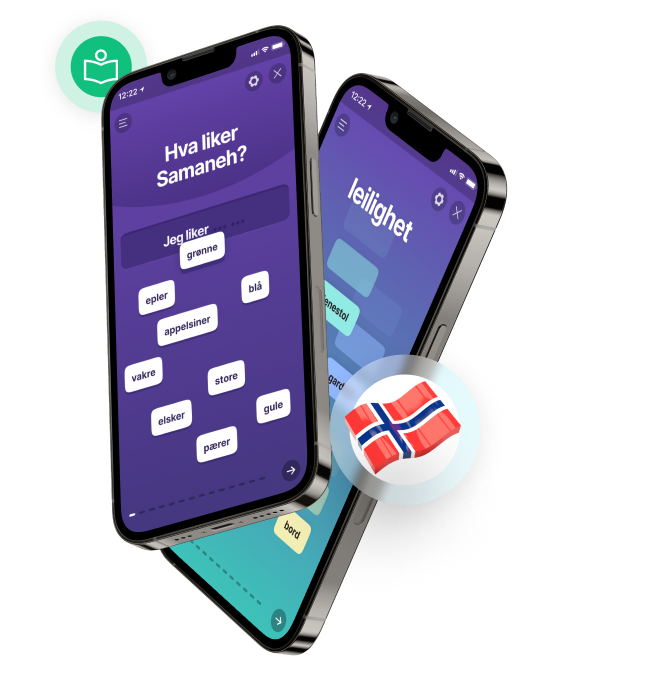
Чи хотіли б ви більше вивчати норвезьку?
Зареєструйтеся сьогодні та вивчіть норвезьку за допомогою нашого ігрового онлайн-курсу «Samanehs reise» від початкового рівня до вільного мовця!
NOK 415 per month