Norwegian Work Culture Explained: Working Hours, Workplace Rules, and Office Etiquette
Starting a new job in Norway can be exciting, but the workplace may feel quite different from what you are used to. Norwegian work culture tends to place a strong emphasis on trust, independence, equality, cooperation, and a healthy balance between work and private life.

For foreigners, some of these differences can be surprising. Your manager may expect you to work independently rather than tell you exactly what to do. Meetings may feel informal, employees may openly disagree with managers, and staying late at the office every day is generally not seen as a sign of commitment.
At the same time, Norwegian workplaces are not all the same. A large international company in Oslo can feel very different from a small local business or a workplace in healthcare, construction, hospitality, or manufacturing.
Understanding the general principles of Norwegian work culture can nevertheless make it much easier to adapt to your new job.
What is Norwegian work culture like?
Norwegian work culture is often associated with relatively flat workplace structures, employee participation, trust, and a strong separation between work and personal life.
The relationship between managers and employees can be less formal than in many other countries. Employees are generally expected to contribute ideas, ask questions, take responsibility for their work, and speak up when they see a problem.
Employee participation is also an established part of the Norwegian working environment. Norwegian regulations give employees and their representatives opportunities to participate in decisions and processes affecting the workplace.
For someone coming from a more hierarchical work environment, this can take some time to get used to.
You may discover that your manager expects you to say what you think instead of simply agreeing with them.
Working hours in Norway
One of the most important things to understand about Norwegian work culture is the approach to working hours.
According to the Norwegian Labour Inspection Authority's guidance on working hours, normal working hours are generally limited to 9 hours per 24 hours and 40 hours per seven days. However, many employees have shorter working weeks through their employment contracts or collective agreements. A 37.5-hour working week is common in Norway.
Your actual working hours should be specified in your employment contract.
For many office workers, a typical day might look something like:
08:00–16:00
or
08:30–16:00
depending on the workplace and the length of the lunch break.
The exact schedule varies considerably by industry and employer, so you should always check your contract rather than assume that every Norwegian company follows the same timetable.
Do Norwegians work overtime?
Overtime exists in Norway, but it is not generally intended to be a permanent part of a job.
The Norwegian Labour Inspection Authority's overtime rules explain that overtime can normally only be required when there is an exceptional and time-limited need for it.
Employees who work overtime are normally entitled to an overtime supplement of at least 40% of their agreed hourly wage. Collective agreements or employment contracts can provide better conditions.
This is one reason why regularly staying in the office for several extra hours may not have the same cultural meaning in Norway as it does in some other countries.
If you occasionally need to stay late because of an important deadline, that is one thing. Making a habit of working late every evening is different.
Lunch breaks and breaks at work
Breaks are also regulated by Norwegian law.
As a general rule, employees are entitled to at least one break when their working day exceeds 5.5 hours. If you work eight hours, you are normally entitled to at least a 30-minute break.
In an office, lunch is often relatively informal. Employees may eat together, go to a canteen, bring food from home, or take a short walk.
One cultural difference foreigners sometimes notice is that lunch does not necessarily mean a long social event.
You might have 30 minutes to eat and then return to work.
At the same time, taking your break is generally considered normal. You do not necessarily need to demonstrate commitment by skipping lunch or working through every break.
Work-life balance is important
A major part of Norwegian work culture is the idea that your job is only one part of your life.
People may leave work on time to pick up their children, go to the gym, meet friends, go skiing, or simply spend the evening at home.
This does not mean Norwegians are not ambitious or hardworking. It means that professional commitment is not necessarily measured by the number of hours you spend physically at work.
In many workplaces, being productive during your agreed working hours is more important than being the last person to leave the office.
This can be particularly noticeable if you come from a culture where employees are expected to stay late because their manager is still working.
Norwegian workplace hierarchy
Norwegian workplaces can have relatively flat hierarchies.
A manager is still a manager, but employees may communicate with managers in a fairly direct and informal way.
For example, it may be completely normal to:
-
Ask your manager why a decision was made
-
Suggest a different approach
-
Disagree respectfully during a meeting
-
Ask for clarification
-
Contact a manager directly
-
Address your manager by their first name
Using first names is particularly common.
Titles can still matter in certain professions and formal situations, but everyday workplace communication is often less formal than foreigners might expect.
Does this mean managers have no authority?
No.
A flat hierarchy does not mean that everyone has the same role or decision-making authority.
The difference is often in how authority is exercised.
A Norwegian manager may expect an employee to work independently and make decisions within their area of responsibility. If you constantly wait for instructions before doing anything, your manager may interpret this as a lack of initiative.
At the same time, you should not assume that you can make every decision without consulting anyone.
Learning where your responsibility begins and ends is an important part of adapting to Norwegian work culture.
Independence and taking responsibility
One of the biggest adjustments for some foreign workers is the expectation of independence.
You may receive a task with a general objective rather than detailed instructions for every step.
For example, your manager might say:
“We need this report by Friday. Can you take care of it?”
They may expect you to decide how to organise the work, ask questions when necessary, and deliver the finished result.
If something is unclear, asking questions is perfectly acceptable. In fact, it is usually better to clarify expectations than spend several days working in the wrong direction.
A useful approach is:
Understand the goal → clarify anything unclear → make a plan → do the work → communicate if there is a problem.
Communication in Norwegian workplaces
Communication is often relatively direct, but there is an important distinction between being direct and being rude.
You may hear people say things such as:
“That may not work.”
“I disagree.”
“I think we should try something else.”
“This needs to be changed.”
These statements do not necessarily indicate conflict.
Norwegian workplace communication often aims to separate the idea from the person. Disagreeing with a proposal does not automatically mean that you have a personal problem with the person who made it.
This can be confusing if you come from a culture where disagreement is usually expressed more indirectly.
Likewise, Norwegian colleagues may interpret very indirect communication as uncertainty or a lack of clarity.
If you have a problem, it is usually better to explain it clearly and respectfully.
Meetings in Norway
Meetings can be relatively informal and practical.
People are generally expected to arrive prepared and contribute when they have something useful to say.
You do not necessarily need to speak simply to demonstrate that you are participating.
At the same time, staying completely silent in every meeting may make it difficult for colleagues to understand your opinions or expertise.
If you disagree with something, you can normally say so politely.
For example:
“I see your point, but I think we should also consider…”
“Could we look at another option?”
“I am not sure this will work because…”
This style is often more useful than simply saying that something is wrong.
Punctuality matters
The workplace may be informal, but that does not mean that time is unimportant.
If a meeting starts at 09:00, arriving at 09:10 without explanation may not create a good impression.
Being on time is a simple way to show respect for your colleagues.
If you know that you are going to be late, send a message as soon as possible.
The same applies to deadlines. If you realise that you cannot finish something on time, communicate this early rather than waiting until the deadline has passed.
Office dress code
There is no single Norwegian dress code.
However, many Norwegian workplaces are relatively casual compared with more formal business cultures.
In a technology company, jeans and a sweater may be perfectly normal. In a bank, law firm, hotel, or client-facing position, expectations may be more formal.
If you are starting a new job and are unsure what to wear, observe what your colleagues wear during your first few days.
It is usually easier to become slightly more casual later than to arrive dramatically underdressed on your first day.
Socialising with colleagues
Norwegian workplaces can be friendly without necessarily becoming highly personal.
You may have lunch together, coffee breaks, after-work activities, Christmas parties, team events, or informal gatherings.
However, colleagues may also keep a clear boundary between their professional and private lives.
Do not assume that someone friendly at work automatically wants to become a close personal friend.
This is not necessarily a sign that they dislike you.
For foreigners, joining informal activities can nevertheless be a useful way to build relationships with colleagues.
Coffee and informal conversations
Coffee plays an important role in many Norwegian workplaces.
You may hear the word kaffe frequently, and informal coffee breaks can be a useful social opportunity.
Small conversations about the weekend, holidays, weather, outdoor activities, food, or everyday life can help you get to know colleagues.
If your Norwegian is still developing, do not worry if you cannot follow every conversation.
Even learning a few simple workplace expressions can make these situations easier.
For example:
Hvordan går det? — How are you?
Hvordan var helgen? — How was your weekend?
Skal vi ta en kaffe? — Shall we have a coffee?
Vi snakkes! — See you!
Ha en fin dag! — Have a nice day!
Learning Norwegian can make everyday workplace communication much easier, even if your colleagues speak English.
If you want to improve your Norwegian for work and everyday life, you can explore Lingu's Norwegian courses and choose a course format that fits your schedule.
Holidays and time off
Norwegian employees have a legal right to at least 25 working days of holiday each year.
Because Saturdays count as working days under the Holiday Act, this normally corresponds to four weeks and one day of holiday. Many employees have an additional fifth week through a collective agreement or employment arrangement.
The Norwegian Labour Inspection Authority's holiday guidance explains the rules around holiday entitlement, when holidays can be taken, and how employers and employees arrange holiday periods.
Summer holidays are particularly important in Norway. Many people take several consecutive weeks off during the summer, and workplaces can become noticeably quieter during July.
If you are new to Norway, it is worth asking your employer how holiday planning works in your company.
Do not simply assume that you can choose any dates you want.
The timing of holidays is generally coordinated with the employer. As a general rule, the employer has the final say if the two sides cannot agree, although employees have specific rights concerning the main holiday period.
Workplace rules you should know
Norwegian work culture is informal in many ways, but the workplace itself is strongly regulated.
The Working Environment Act covers areas including working hours, overtime, breaks, employment protection, the working environment, and employee participation.
Your employer should provide you with information about your working conditions, and your employment contract should clearly state important details such as your position, pay, working hours, and other conditions.
You should also know who your verneombud, or safety representative, is.
Safety representatives have an important role in Norwegian workplaces and work to help ensure that the employer fulfils its responsibilities concerning employees' health, safety, and welfare.
If you are unfamiliar with your rights as an employee, the Norwegian Labour Inspection Authority's guide to employee rights and obligations is a useful starting point. It covers topics including working hours, overtime, holiday, holiday pay, and salary deductions.
Equality and respect at work
Equality is an important principle in Norwegian working life.
Discrimination in employment is prohibited on several grounds, including gender, pregnancy, ethnicity, national origin, language, religion, disability, sexual orientation, and age, among others.
Norwegian workplaces are also expected to maintain a safe and proper working environment.
This includes more than physical safety. The working environment rules also cover psychosocial and organisational aspects of work.
Employees also have opportunities to participate in workplace matters through established employee-participation arrangements.
If you experience serious problems at work, you should first understand your company's internal procedures and identify the appropriate person to contact, such as your manager, HR department, trade union representative, or safety representative.
What should foreigners avoid doing?
There is no universal list of things you should never do in a Norwegian workplace, but several habits can create misunderstandings.
Don't wait for your manager to tell you everything
If you understand the task, take reasonable initiative.
Don't confuse informality with a lack of professionalism
A manager may wear jeans and invite you to use their first name while still expecting excellent work.
Don't hide problems
If you know that something is going wrong, communicate early.
Don't take disagreement personally
A colleague questioning your proposal does not necessarily mean they are questioning you personally.
Don't assume long hours equal good performance
Working efficiently and delivering good results are generally more important than simply spending extra hours at the office.
Don't be afraid to ask questions
Especially when you are new to Norway, asking how something works is completely reasonable.
Useful Norwegian workplace words
Learning a few Norwegian workplace terms can make your first months easier.
Arbeidsplass — workplace
Arbeidstid — working hours
Arbeidsavtale — employment contract
Arbeidsgiver — employer
Arbeidstaker — employee
Lønn — salary/pay
Overtid — overtime
Pause — break
Ferie — holiday/vacation
Møte — meeting
Leder — manager/leader
Kollega — colleague
Arbeidsmiljø — working environment
Verneombud — safety representative
Tillitsvalgt — employee/trade union representative
Knowing these words can be particularly useful when reading your employment contract or workplace information.
How to adapt to Norwegian work culture as a foreigner
The easiest way to adapt is to observe first and adjust gradually.
Pay attention to how your colleagues communicate with managers, how meetings are organised, when people take lunch, how deadlines are discussed, and how employees communicate when they disagree.
At the same time, you do not need to completely change your personality.
Being polite, reliable, curious, and willing to learn will take you a long way.
Language can also make a major difference.
Even if your workplace operates mainly in English, Norwegian can help you participate in informal conversations, understand workplace communication, and build stronger relationships with colleagues.
You may also find Lingu's guide to finding a job in Norway as a foreigner useful if you are still looking for work.
FAQ about Norwegian work culture
Is Norwegian work culture really less hierarchical?
Many Norwegian workplaces have relatively flat organisational structures and encourage employee participation, but the degree of hierarchy varies between companies, industries, and individual managers.
What are normal working hours in Norway?
The legal limit for normal working hours is generally 9 hours per 24 hours and 40 hours per seven days. A 37.5-hour working week is also common through employment contracts or collective agreements.
Do Norwegians work overtime?
Yes, overtime exists, but it is regulated and is not intended to be a permanent working arrangement. Employees are generally entitled to an overtime supplement of at least 40%.
Is it normal to call your boss by their first name in Norway?
Yes. Using first names with managers is common in many Norwegian workplaces, although more formal communication may still be appropriate in some professions and situations.
Are Norwegian workplaces informal?
Many are relatively informal, especially in everyday communication. However, informal communication does not mean that expectations around performance, deadlines, and professionalism are low.
How many vacation days do employees get in Norway?
Employees are legally entitled to at least 25 working days of holiday each year. Many employees have a fifth week through collective agreements or employment arrangements.
Do I need to speak Norwegian to work in Norway?
Not always. Some jobs, particularly in international companies and certain professional sectors, can be conducted primarily in English. However, Norwegian can significantly expand your job opportunities and make everyday workplace communication easier.
What is the most important thing for foreigners to understand about Norwegian work culture?
A useful starting point is to understand that independence, trust, cooperation, and work-life balance can be important parts of Norwegian working life. You are generally expected to take responsibility for your work while also communicating openly when you need help or clarification.
Final thoughts
Norwegian work culture can feel quite different when you first arrive in Norway.
The workplace may seem informal, managers may give you more independence than you are used to, colleagues may disagree openly, and people may leave work on time even when there is still plenty to do.
These habits make more sense once you understand the underlying expectations: be reliable, take responsibility, communicate clearly, respect other people's time, and contribute to the workplace.
You do not need to know every Norwegian workplace rule before your first day. Start by observing how your colleagues work, ask questions when something is unclear, and gradually learn the language and unwritten rules around you.
That combination of language skills and cultural understanding can make it much easier to build a successful working life in Norway
Would you like to learn more Norwegian?
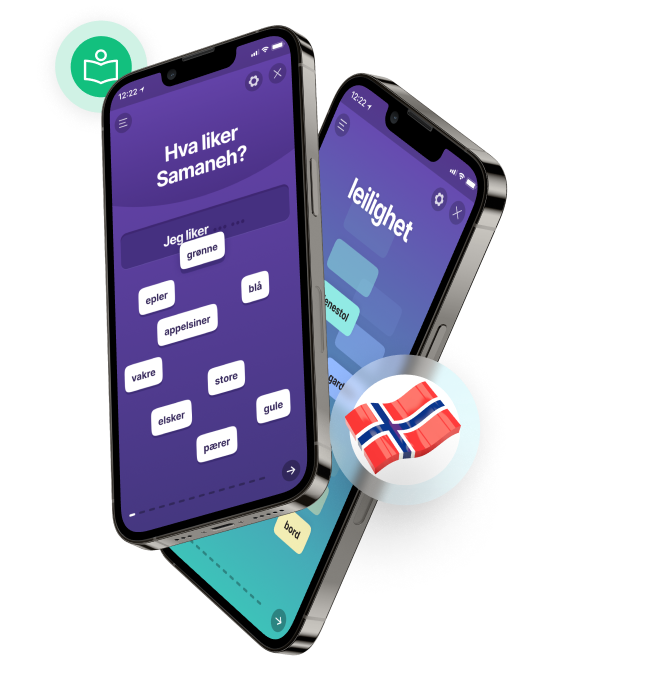
Sign up today and learn Norwegian with our game-based online language course «Samanehs reise», from beginner level to fluent speaker!
NOK 415 per month